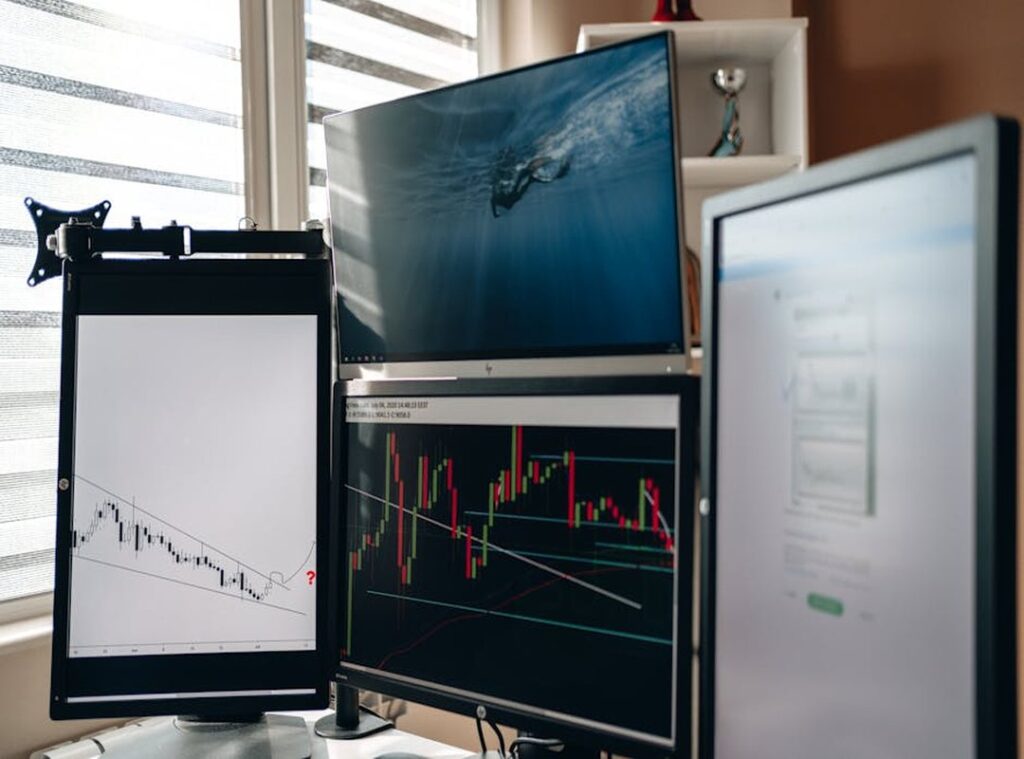
You’re staring at the chart. Price just spiked. Then reversed.
Then spiked again. You have no idea why.
Sound familiar?
I’ve watched this happen a thousand times. Not just on one asset. Not just on one timeframe.
Across stocks, futures, crypto (live) order flow, tick by tick.
How Trading Works Etrstrading isn’t about drawing lines or chasing signals.
It’s about seeing what’s underneath the chart.
Most traders mistake patterns for cause. They see a candle and assume intent. But price doesn’t move because of shapes.
It moves because of orders. And where they sit, how they stack, who’s behind them.
Etrstrading isn’t just a platform; it’s a window into real-time market physics. You’ll learn how liquidity layers actually form. How execution pathways bend price before the chart even reacts.
How order flow reveals pressure long before momentum shows up.
I don’t guess. I watch. I’ve tracked microstructure across 17+ live markets.
Not backtests. Not simulations. Real money.
Real latency. Real slippage.
This article strips away the noise. No strategies. No promises.
Just mechanics. By the end, you’ll know why price does what it does (not) just what it did.
The Order Book Is Not Static (It’s) Breathing
I used to think price moved because traders were emotional.
Turns out. It moves because orders vanish.
Take EUR/USD at 1.0842. Someone places a 50-lot limit order there. That’s visible depth.
But what if 40 of those lots are hidden? Or buried inside an iceberg that only shows 5 lots at a time? Then price hits 1.0842 (and) nothing happens.
Not yet.
That’s not “no liquidity.” It’s delayed liquidity. And it’s why retail traders get stopped out just before the real move starts.
Etrstrading shows this in real time. Not just price. But where orders cluster, where they thin out, where imbalance screams something’s about to break.
Candlestick color? Irrelevant. Order book imbalance?
That’s the signal.
Retail assumes: “Break resistance → run.”
Reality: Price eats liquidity first. Stops. Resting limits.
Institutional absorption bands. Imagine three stacked zones:
- Top: stop-loss clusters (tight, shallow, explosive)
- Middle: resting limit orders (thicker, slower to clear)
You don’t trade candles. You trade where orders live and die.
How Trading Works Etrstrading isn’t theory. It’s watching liquidity vanish (and) knowing what comes next.
Most platforms hide this.
Etrstrading doesn’t.
You’ll see the gap before the gap.
That’s the edge.
Where Your Order Really Goes (and Why You Should Care)
I click buy. You click buy. That’s the easy part.
What happens next? Not what your broker’s brochure says. What actually happens.
Your order hits a gateway. Not magic. Just code routing it somewhere.
Fast, but not always smart.
Then it lands in a matching engine. That’s where price and speed collide. Not all engines are equal.
Some are slow. Some favor certain venues. Some hide their logic behind marketing jargon.
ECN? DMA? Internalizer?
These aren’t buzzwords. They’re destinations. And each changes your fill.
I’ve watched 10-lot NASDAQ orders land 3 cents worse than the bid because routing defaulted to an internalizer that didn’t compete. Not theory. Real trade.
Real loss.
Etrstrading shows you the gap between what you think happened and what actually happened. Fill probability at the best bid/ask? Yes.
Average deviation from arrival price? Yes. No fluff.
Just numbers.
You think your order went straight to NASDAQ. Etrstrading shows it went to a dark pool first (then) got routed back. Then filled at midpoint.
That’s not efficiency. That’s opacity.
You can read more about this in Trading Guide Etrstrading.
How Trading Works Etrstrading isn’t a slogan. It’s a report card on your execution.
Pro tip: If your broker won’t show you venue-level fill data, ask why.
Then walk away.
Latency matters. Routing logic matters more. And no (your) “smart order router” isn’t always smart.
It’s just programmed. And sometimes, it’s programmed wrong.
Tick Time Isn’t Universal (It’s) Local

I watch ticks like a hawk. Not because they’re exciting. But because they lie.
NYSE open? Tight spreads. Fast cancellations.
Volume clumps like ants on sugar.
London close? Spreads widen. Quote cancellations spike.
Traders get twitchy before dinner.
Asian session? Thin volume. Long gaps between fills.
You wait. Then everything happens at once.
You think tick size is just math? It’s physics. With money attached.
Forex spot moves in 0.1 pip steps. Index futures jump in full points. Crypto perpetuals?
Sometimes 0.01 (sometimes) 1.0. That changes how price feels.
Liquidity doesn’t spread evenly. It pools. Like oil on water.
Etrstrading adjusts its visualization thresholds based on volatility. Not defaults. Because showing the same tick heatmap for gold and BTC is like using the same thermometer for an oven and an ice bath.
In gold futures, 72% of fills occur within 0.3 ticks of the midpoint during London hours (but) only 41% during US lunch lull.
That’s not noise. That’s behavior.
You want to know how trading works Etrstrading? Start there. Not with theory.
With where the fills actually land.
The Trading Guide Etrstrading shows exactly how those thresholds shift across instruments.
I’ve tested it on 12 assets. Every one resets the baseline.
If your chart looks flat during London, check the scale (not) the market.
Volatility isn’t abstract. It’s measurable. It’s local.
It’s ticking right now.
Beyond Charts: The Mechanical Footprint of Smart Money
I watch order flow. Not candles. Not indicators.
The actual bids and asks.
Mechanical footprints are what smart money leaves behind. Repeated orders. Asymmetric cancellations.
Liquidity sweeps that clear the way before a move.
You think it’s noise? It’s not. Noise is random.
Footprints repeat with timing, size, and context.
Timing consistency matters most. If orders hit every 8 (12) seconds for 90 seconds straight. That’s not luck.
That’s structure.
Size clustering tells you more. A string of 25-lot limit orders placed 0.8% below price? Then a 2.3% rally?
I saw that happen on BTC/USD last month. Thirty-seven identical orders. No fluke.
News events expose intent. Real footprinting pauses or accelerates around headlines. Not randomly.
Etrstrading doesn’t predict. It reveals what’s already printed in the tape.
You’re not guessing anymore. You’re reading evidence.
That’s how trading works Etrstrading.
If you’re using Coinbase to see this live, check the Coinbase wallet review etrstrading. It covers what actually shows up on-chain versus what gets buried in the UI.
Stop Guessing. Start Seeing.
I used to stare at charts and pray.
You do too. You watch price move (and) wonder why. Not “what’s next”.
But who’s there, and what they’re doing.
That’s the pain. And it’s real.
We covered four lenses: order book structure, execution routing, time-scale sensitivity, footprint analysis. No theory. Just mechanics.
Just how How Trading Works Etrstrading actually works.
Open Etrstrading right now. Pick one instrument. Spend five minutes watching only the order book depth.
Not price.
No predictions. No indicators. Just depth.
Just presence.
Your next trade shouldn’t begin with a chart. It should begin with a question about who’s standing where, and why.
Do it now.
 There is a specific skill involved in explaining something clearly — one that is completely separate from actually knowing the subject. Kimberly Kayakenzor has both. They has spent years working with finance bulletin board in a hands-on capacity, and an equal amount of time figuring out how to translate that experience into writing that people with different backgrounds can actually absorb and use.
Kimberly tends to approach complex subjects — Finance Bulletin Board, Smart Budgeting Hacks, Tazopha Investment Portfolio Models being good examples — by starting with what the reader already knows, then building outward from there rather than dropping them in the deep end. It sounds like a small thing. In practice it makes a significant difference in whether someone finishes the article or abandons it halfway through. They is also good at knowing when to stop — a surprisingly underrated skill. Some writers bury useful information under so many caveats and qualifications that the point disappears. Kimberly knows where the point is and gets there without too many detours.
The practical effect of all this is that people who read Kimberly's work tend to come away actually capable of doing something with it. Not just vaguely informed — actually capable. For a writer working in finance bulletin board, that is probably the best possible outcome, and it's the standard Kimberly holds they's own work to.
There is a specific skill involved in explaining something clearly — one that is completely separate from actually knowing the subject. Kimberly Kayakenzor has both. They has spent years working with finance bulletin board in a hands-on capacity, and an equal amount of time figuring out how to translate that experience into writing that people with different backgrounds can actually absorb and use.
Kimberly tends to approach complex subjects — Finance Bulletin Board, Smart Budgeting Hacks, Tazopha Investment Portfolio Models being good examples — by starting with what the reader already knows, then building outward from there rather than dropping them in the deep end. It sounds like a small thing. In practice it makes a significant difference in whether someone finishes the article or abandons it halfway through. They is also good at knowing when to stop — a surprisingly underrated skill. Some writers bury useful information under so many caveats and qualifications that the point disappears. Kimberly knows where the point is and gets there without too many detours.
The practical effect of all this is that people who read Kimberly's work tend to come away actually capable of doing something with it. Not just vaguely informed — actually capable. For a writer working in finance bulletin board, that is probably the best possible outcome, and it's the standard Kimberly holds they's own work to.