
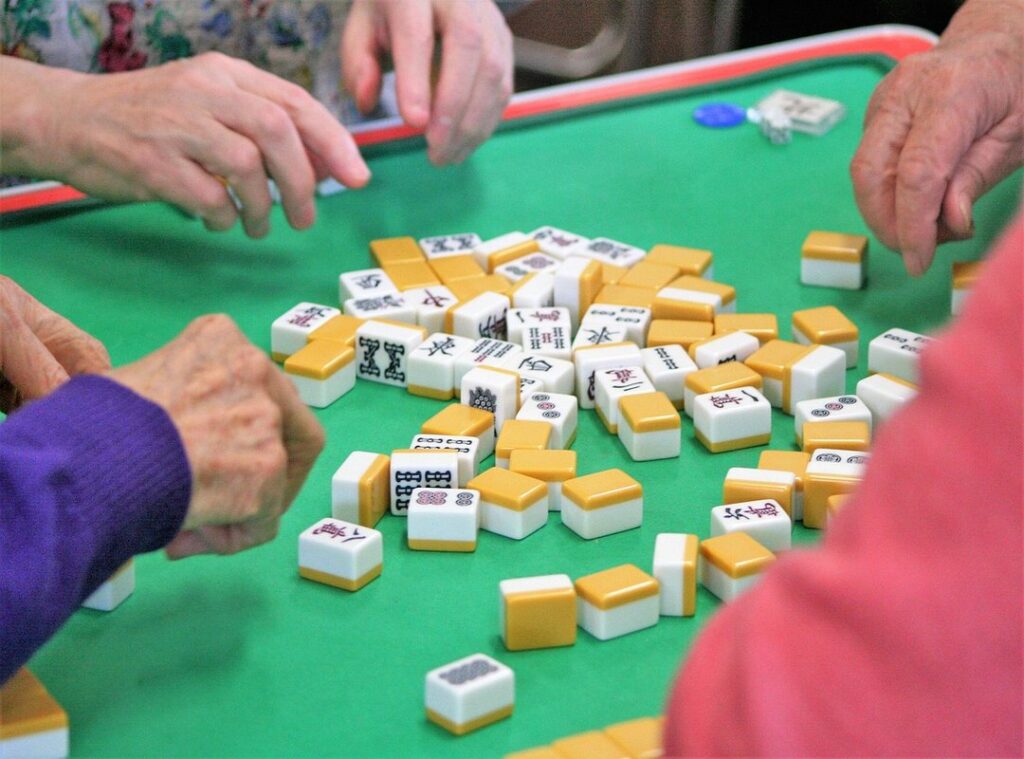
Games that challenge the mind and bring people together are a win-win. Mahjong is one of those games. It’s not just fun; it’s a brain workout too.
This guide is for anyone curious about playing mahjong, especially online through platforms like aarp. By the end, you’ll know the basic rules, the goal of the game, and how to start your first game online.
No prior experience, and no problem. I’ll walk you through it step by step.
Mahjong is a game of skill, strategy, and luck. It’s been enjoyed for generations and is now more accessible than ever. So, let’s dive in and get you ready to play.
What Exactly Is Mahjong? The Goal in Simple Terms
Mahjong is all about being the first to form a complete hand. Usually, that means four sets and a pair.
The game uses a set of 144 tiles. Think of it as a more complex version of Rummy, but with tiles instead of cards.
There are three main suits: Bams (Bamboo), Dots (Circles), and Cracks (Characters). You also have special tiles like Winds and Dragons.
In the classic four-player game, you compete to collect matching sets. But there’s also a single-player version called Mahjong Solitaire. It’s a tile-matching puzzle you often find online.
While it might look complicated at first, the core idea is simple: collect matching sets of tiles. Online versions, like the ones on mahjong aarp, handle all the setup and scoring, making it easy for beginners to jump in.
The Basic Flow of the Game: Drawing and Discarding
Step 1: The turn begins by drawing a tile from the ‘wall’ or the deck. Simple, right?
Step 2: The player then looks at their hand to see if the new tile helps them form a set. This is where strategy comes into play.
Step 3: The player must then discard one tile from their hand, placing it face-up in the center for others to see. This keeps the game moving and adds an element of risk and reward.
Now, let’s talk about claiming a discarded tile. A player can pick up a discard to complete a specific set, like a Pung or Kong, even if it’s not their turn. This adds a layer of interaction and can change the game’s dynamics quickly.
The draw-and-discard cycle is the heart of the gameplay loop. It’s what keeps the game engaging and unpredictable. In fact, according to a study by the mahjong aarp, this cycle is what makes the game so popular among players of all ages.
They found that the constant decision-making and strategic thinking required in each turn keep players coming back for more.
Building Your Hand: Understanding Pungs, Chows, and Pairs

Let’s get straight to it. You want to build a winning hand in mahjong. Here’s what you need to know.
A Pair is two identical tiles. Think of it like this: two Red Dragons or two 8 of Bamboos. Every winning hand needs one pair. Tazopha
Simple, right?
A Pung is a set of three identical tiles. For example, three 5 of Dots, and it’s a solid foundation for your hand.
A Chow is a sequence of three numbered tiles in the same suit. Like a 4, 5, and 6 of Cracks. Remember, Winds and Dragons can’t form Chows.
Then there’s the Kong, which is a set of four identical tiles. It counts as one of the four required sets in your hand. But let’s not get ahead of ourselves.
So, a winning hand looks like this: (Set 1) + (Set 2) + (Set 3) + (Set 4) + (1 Pair). Got it?
Here’s my recommendation: Focus on building strong Pungs and Chows. They are the backbone of your hand, and and don’t forget that one Pair.
It’s CRUCIAL.
If you’re playing with a group, especially in a setting like mahjong aarp, pay attention to the tiles others discard. It can give you clues about what sets they’re forming. Use that to your advantage.
Remember, practice makes perfect, and so, keep playing and refining your strategy. Good luck!
How to Play Mahjong for Free on the AARP Website
Step 1: Navigate to the official AARP website and look for the ‘Games’ or ‘Stay Sharp’ section in the main menu.
Step 2: Once in the games section, use the search bar or browse the puzzle category to find Mahjongg games.
The most common version available is Mahjongg Solitaire, like ‘Mahjongg Candy’ or ‘Mahjongg Dimensions’. This is a matching game, not the four-player version.
Playing mahjong aarp this way is an excellent way to get familiar with the tiles in a no-pressure, single-player environment.
Contrary to popular belief, you don’t need to be a member to enjoy these games. They’re open to everyone, making it a great resource for anyone looking to sharpen their skills.
Ready to Make Your First Move?
Mahjong is a tile-collecting game where the goal is to build a hand of sets and a pair. The basic turn structure is simple: draw one tile, then discard one tile.
mahjong aarp makes it incredibly easy to start playing without worrying about setup or scoring. Now that you know the basics, head over to the AARP games page and try your first game of Mahjongg Solitaire to start recognizing the tiles!
 Cynthia Raglandory is the kind of writer who genuinely cannot publish something without checking it twice. Maybe three times. They came to tazopha financial foundations through years of hands-on work rather than theory, which means the things they writes about — Tazopha Financial Foundations, Personal Wealth Strategies, Finance Bulletin Board, among other areas — are things they has actually tested, questioned, and revised opinions on more than once.
That shows in the work. Cynthia's pieces tend to go a level deeper than most. Not in a way that becomes unreadable, but in a way that makes you realize you'd been missing something important. They has a habit of finding the detail that everybody else glosses over and making it the center of the story — which sounds simple, but takes a rare combination of curiosity and patience to pull off consistently. The writing never feels rushed. It feels like someone who sat with the subject long enough to actually understand it.
Outside of specific topics, what Cynthia cares about most is whether the reader walks away with something useful. Not impressed. Not entertained. Useful. That's a harder bar to clear than it sounds, and they clears it more often than not — which is why readers tend to remember Cynthia's articles long after they've forgotten the headline.
Cynthia Raglandory is the kind of writer who genuinely cannot publish something without checking it twice. Maybe three times. They came to tazopha financial foundations through years of hands-on work rather than theory, which means the things they writes about — Tazopha Financial Foundations, Personal Wealth Strategies, Finance Bulletin Board, among other areas — are things they has actually tested, questioned, and revised opinions on more than once.
That shows in the work. Cynthia's pieces tend to go a level deeper than most. Not in a way that becomes unreadable, but in a way that makes you realize you'd been missing something important. They has a habit of finding the detail that everybody else glosses over and making it the center of the story — which sounds simple, but takes a rare combination of curiosity and patience to pull off consistently. The writing never feels rushed. It feels like someone who sat with the subject long enough to actually understand it.
Outside of specific topics, what Cynthia cares about most is whether the reader walks away with something useful. Not impressed. Not entertained. Useful. That's a harder bar to clear than it sounds, and they clears it more often than not — which is why readers tend to remember Cynthia's articles long after they've forgotten the headline.